Women in Construction: Thriving?
Barbra Carlisle • January 29, 2026
Are times really changing for women in the construction sector?
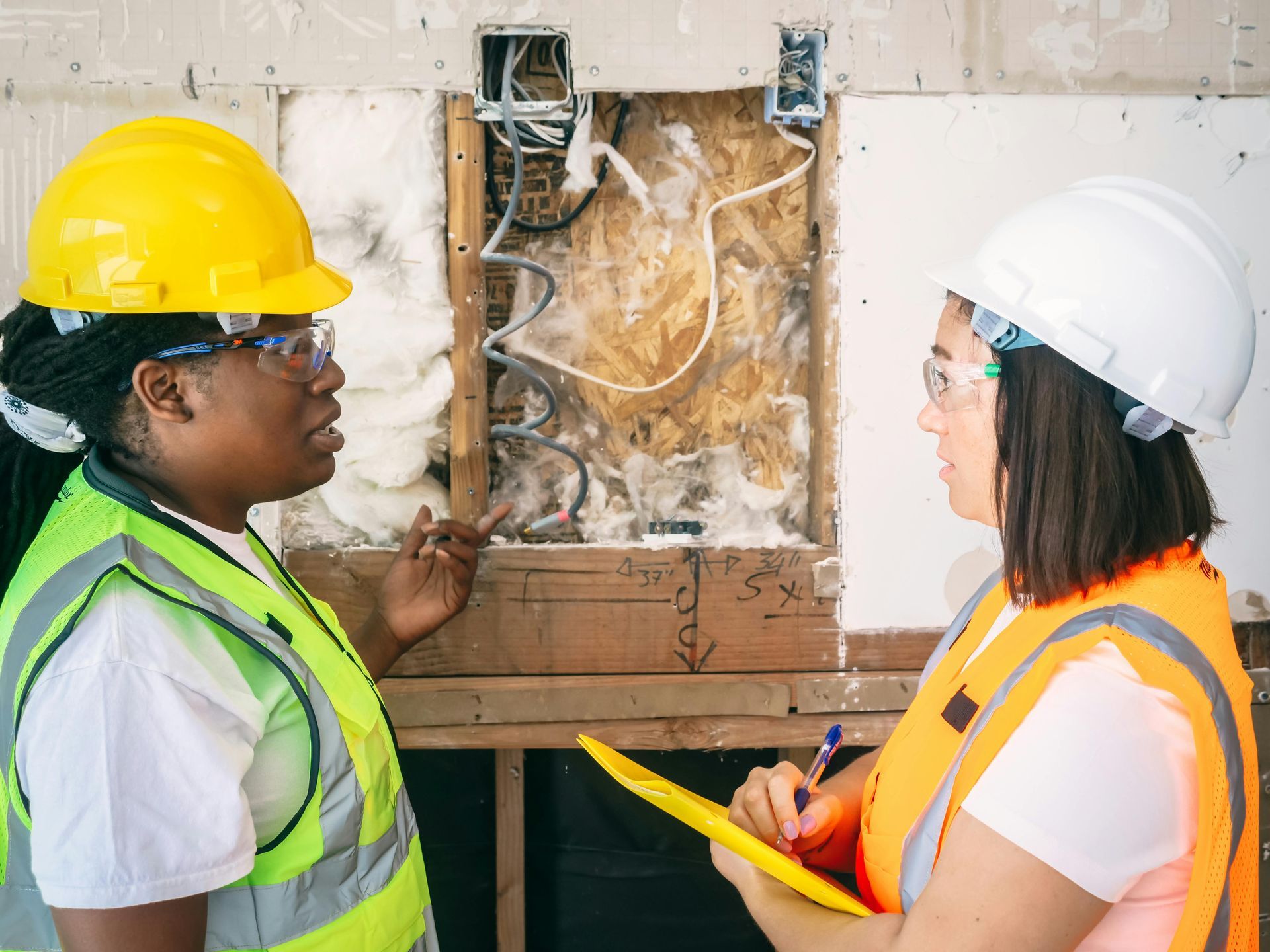
Navigating a career as a woman in construction can feel challenging as Kathleen Abbott Chief Growth Officer at Shawmut discussed on The Unlikely Executive podcast recently with me.
She talks about the challenge and about what’s possible when curiosity, resilience and strategic leadership come together. She reminded me that the sector is changing, expectations are shifting, and inclusive leadership is becoming a commercial necessity.
In the UK, women still make up only around 15% of the construction workforce and just 1% of manual site workers, which means the industry continues to miss out on diverse perspectives, problem‑solving approaches and leadership talent.
Building Confidence in a Male‑Dominated Sector
While the UK has made progress, cultural challenges persist and with the workforce shrinking by 12% compared with 2019 levels, according to the ONS, the industry needs more capable leaders, including women, to fill gaps and drive performance.
Resilience, confidence and advocacy are non‑negotiable. Kathleen’s experience mirrors what many female professionals face: you must back your capability, seek environments where safety and wellbeing are prioritised, and surround yourself with mentors who champion diversity and fairness.
Embracing Curiosity and Continual Learning
Kathleen went from from geologist to Chief Growth Officer. This is a study in adaptive leadership. Her curiosity pulled her from technical roles into strategic, commercial and people‑focused positions.
This is particularly relevant in the UK, where the industry is expected to face a 250,000‑worker shortfall by 2028 creating huge opportunities for women who are willing to develop new skills and step into leadership.
Ideas on how to thrive
- Stretch beyond your discipline, technical expertise + strategic thinking = leadership edge.
- Ask questions constantly.
- Move toward roles that push your boundaries - business development, project leadership, or commercial strategy.
Cultivating Networks and Support Systems
Senior roles can feel isolating especially for women who may not see many female peers around them.
In the UK, networking is still one of the biggest career accelerators in construction, particularly in owner‑led firms.
Schedule networking deliberately: industry forums, mentorship programmes, women‑in‑construction groups, or cross‑organisational peer circles. When pressure hits, having a trusted network is critical.
Balancing Ambition and Wellness
The UK construction industry is under intense pressure such as cost inflation, labour shortages, and tighter sustainability requirements.
This environment can push ambitious women toward burnout if boundaries aren’t clear.
Kathleen’s principle of “non‑negotiables” eg exercise, family time, routines is essential for long‑term leadership impact.
- Decide your non‑negotiables and protect them.
- Communicate boundaries clearly to colleagues.
- Replace perfection with progress, sustainable careers require sustainable energy.
Your Path to Leadership
Kathleen Abbott’s journey is a modern blueprint for thriving in construction as a woman: curiosity, resilience, diverse skills, strong networks and a commitment to wellbeing. Her message transcends gender as it’s about leading with clarity, purpose and humanity.
If you want to grow your influence, drive cultural change and contribute to a more sustainable and inclusive built environment, start with self‑awareness, strategic relationships and purposeful leadership. This is how careers change.
Want support building your leadership identity and confidence?
Join my programme that is designed for construction and engineering leaders who want to lead decisively, earn respect, and build teams that back their decisions.
If you’re exploring whether leadership development is right for you, book a clarity call with me and we’ll map out your next steps.
Ideas and thoughts on how to lead well through complexity and change

The Intergenerational Advantage: Why Construction Firms Who Blend Ages Will Outperform Everyone Else
If you’re worried about not having enough young people, including women coming into construction, you’re asking the wrong question. The real risk is what happens when you don’t use the people you already have properly. The Crisis No One Is Solving Properly Across the UK, the construction workforce is ageing faster than it’s being replenished. There are 20% more workers aged 55+ than under 25. And it gets worse: 35% of the workforce is now over 50, and only 20% is under 30. Yes this presents an industry risk, but closer to home we see organisational risk. Leaders worry about recruitment, apprenticeships, T levels, Skills Bootcamps all useful, but none of them address the real issue: Experience is walking out of the door every single day, and new capability isn’t being integrated fast enough. This is exactly what my conversation with Colin McEllin MCIOB of Clan Contracting highlighted. When a 21 year old commercial graduate joined Clan Contracting, Colin didn’t roll his eyes or think, “another kid who’s never been on a site.” He leaned into it and welcomes thoughts, ideas and advice from 'young Aaron'. Massive benefits for him, and Aaron, and the wider team. Why Intergenerational Leadership Is Now a Strategic Priority The construction sector is staring at a workforce cliff edge: • 140,000+ vacancies lie unfilled. • By 2036, 750,000 skilled workers will retire, stripping the industry of vital capability. • The UK will need nearly 1 million additional construction workers by 2032. Yet recruitment alone isn’t enough. You cannot hire your way out of this crisis. We must integrate generations on purpose, not by accident. What Younger Workers Bring (That Leaders Ignore at Their Peril) Younger talent offers: • Modern thinking around sustainability and digital tooling • Analytical approaches and better documentation habits • A willingness to question processes that haven't been updated since the 90s • A commercial lens shaped by newer training systems In Colin’s words, their thinking “took him right back to when he was 21” eager, energetic, ideas driven. You want that energy before they lose it. What Older Workers Bring (That You Can’t Replace) Your experienced people have: • 30+ years of instinct • Pattern recognition that no textbook teaches • Quiet influence that stabilises teams • Technical fluency on heritage, concrete, structure, sequencing, conservation, problem solving These people are your institutional memory. Once they go, they’re gone. And currently, UK engineering employers admit they only retain knowledge effectively from 57% of retiring staff. That is a crisis hiding in plain sight. Leadership Actions That Works 1. Create deliberate two way mentoring (not hierarchical mentoring). Younger staff teach digital skills, new processes, sustainability thinking. Older staff teach technical judgment, site sense, risk spotting. Both feel valued. 2. Give young people actual responsibility, not token tasks. The CITB plans 40,000+ industry placements a year. It means nothing if leaders hide young people in the corner. Let them make decisions, with support. 3. Systemise knowledge transfer. You cannot afford to rely on “ask Dave if you need help.” You need processes, templates, technical walkthroughs, shared documentation. 4. Remove the “that’s not how we do it here” reflex. 76% of construction workers say current training doesn’t adequately prepare people for the job. So your way probably isn’t the best way anymore. Your Competitive Advantage Is Sitting Right Under Your Nose When generations work in isolation, capability leaks. When generations work together, capability compounds. The firms who win over the next decade won’t be the ones who grab the talent, it will be the ones who blend talent. Listen to the full episode of the podcast here or watch on You Tube here About me I write about topics that my podcast guests bring to the podcast. They have years of experience with challenges and opportunities along the way, highs and lows and are in the thick of leading with purpose and passion, faults an'all. As a coach and trainer I work with leaders and their times to help them thrive, laugh, enjoy their work, be productive and to build teams of all ages.

We love what we do so we grow in that role, we end up as leader with people around us but we want to stay doing the thing we love doing. Balancing leadership is hard.